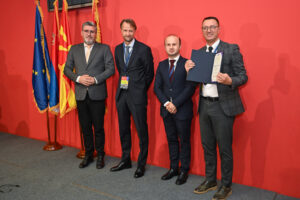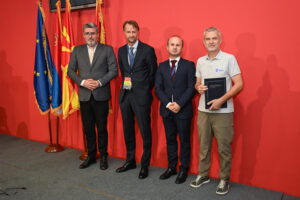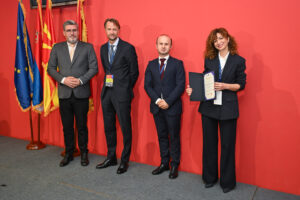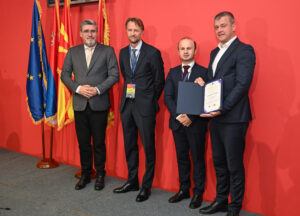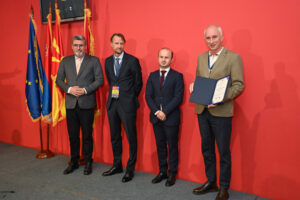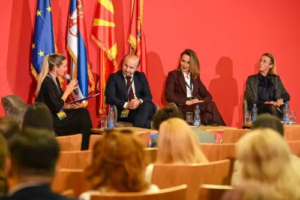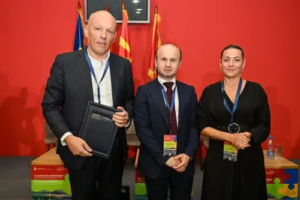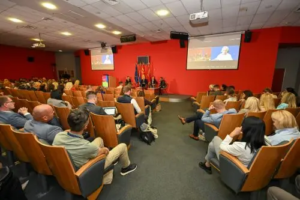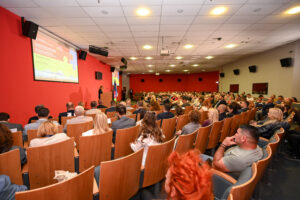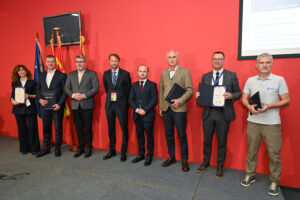

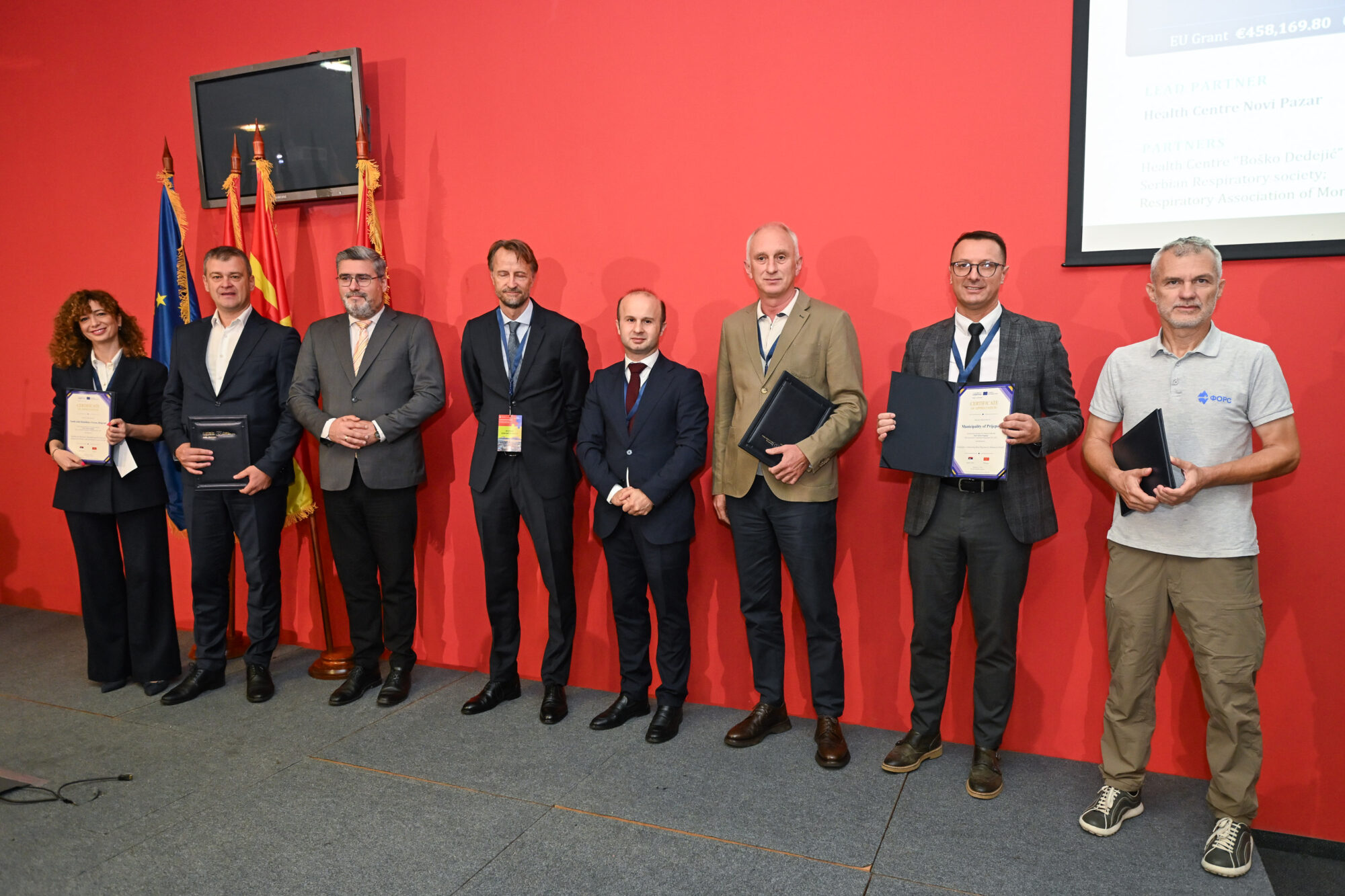
The 10th National Conference on European Territorial Cooperation Programmes was held in Novi Sad today, at which the results of Serbia’s cooperation to date with partners from the European Union and the region were showcased, as well as opportunities for future projects, while grants were ceremonially awarded to beneficiaries of the Serbia–North Macedonia and Serbia–Montenegro Cross-Border Cooperation Programmes.
Andreas von Beckerath, Ambassador and Head of the EU Delegation to Serbia, stated that over the course of 22 years of territorial and cross-border cooperation in Serbia, more than 1,400 projects have been implemented or are currently underway, with a total value of approximately EUR 225 million. 
He noted that over the past two decades, these programmes have been used to equip hospitals, schools, and kindergartens; connect children from border areas through exchanges and sports; restore cultural monuments; modernise border crossings; and build wastewater treatment plants and green transport routes.
Von Beckerath emphasised that Serbia is currently participating in 12 Cross-Border Cooperation Programmes with neighbouring countries and EU Member States, the shared goal of which is to transform borders from dividing lines into spaces of opportunity and cooperation.
According to him, the contracts awarded today under the Serbia–North Macedonia and Serbia–Montenegro programmes link 41 organisations from the three countries through projects backed by over five million euros in European Union support, focusing on employment and mobility, public health, the social inclusion of vulnerable groups, sustainable tourism, and the preservation of cultural and natural heritage.
 Minister of European Integration in a technical mandate Nemanja Starović stated that European integration, aside from reforms, the negotiation process, and harmonisation with EU standards, also has a tangible, everyday dimension reflected in better services, more developed infrastructure, and new opportunities for citizens.
He noted that Serbia has been participating in European Territorial Cooperation Programmes since 2004 and is preparing for the new 2028–2034 programming period, with the aim of ensuring that future programmes respond even more effectively to regional needs and support competitiveness, innovation, the green and digital transition, energy and transport connectivity, and the resilience of local communities.
Mayor of Novi Sad Žarko Mićin stated that the value of European Territorial Cooperation lies not only in institutions, funds, and projects, but also in the fact that it connects people and cities and enables the joint solving of problems that transcend administrative boundaries.
Mićin stated that Novi Sad has practical experience with these programmes and that, since 2012, the city and its founding institutions have been awarded more than 20 projects in the fields of environmental protection, culture, tourism, transport, healthcare, and support for small and medium-sized enterprises.
Representative of the European Commission Nuria Aldao, who addressed the participants in person, assessed that the conference presents a great opportunity for discussion, the exchange of experiences, and continued cooperation, noting that previous years have demonstrated the importance of partnerships forged through the conference and that continuing such cooperation is also vital for Europe’s future. 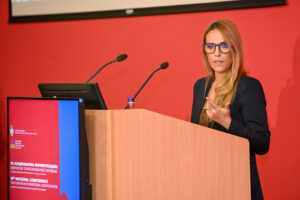
Minister of Local Self-Government of North Macedonia Ivan Stoilković stressed that the milestone, tenth edition of the conference serves as a significant indicator of continuity and the connection between institutions and citizens, and noted that European integration is of great importance to his ministry. He noted that day-to-day cooperation with municipalities makes it possible to identify the challenges and potential of local communities, while EU Cross-Border Cooperation Programmes create better conditions for residents of border areas to overcome shared challenges.
Representative of the European Commission Moray Gilland, in addressing the attendees via video message, assessed that the conference’s ten-year history demonstrates Serbia’s steadfast commitment to regional development, noting that the success of cooperation is measured not only by figures, but also by its impact on people’s lives.
The conference also featured a “Global Europe” panel, as well as thematic sessions dedicated to European Territorial Cooperation Programmes, new opportunities for micro, small, and medium-sized enterprises, and the showcasing of successful projects in Serbia.